

You ship an order. The customer calls to say something is wrong. You check your process, fix the mistake, and move on. Two weeks later, the same problem comes back.
Sound familiar? That cycle of catch, fix, repeat, is what happens when a business focuses only on finding problems after they happen. It’s a quality control loop without any quality assurance behind it, and it costs small businesses far more time and money than most owners realize.
Quality control (QC) and quality assurance (QA) are two different ways of thinking about quality. Most small businesses do one well and skip the other entirely. Understanding both is what separates a business that keeps putting out fires from one that stops lighting them in the first place.
What Is Quality Control?
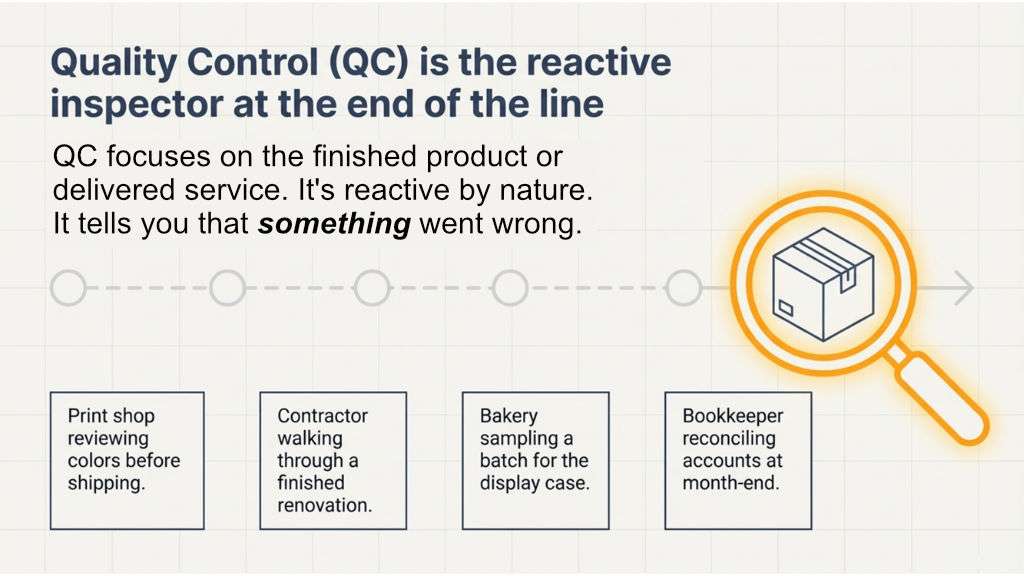
Quality control is the inspection side of quality management. It focuses on the finished product quality or delivered service. It checks whether the output meets your standards before it reaches the customer.
QC is reactive by nature. Something gets made or delivered, and then someone checks it. The goal is to catch problems before your customer does.
Here are some everyday QC examples in a small business:
- A print shop reviews a completed job before it ships to make sure colors and cuts are correct.
- A contractor walks through a completed renovation to catch anything that needs touching up.
- A bakery samples a batch before putting it in the display case.
- A bookkeeper reconciles accounts at the end of the month to catch any errors.
QC tells you that something went wrong. What it does not tell you is why it occurred, or how to keep it from happening again. That is where quality assurance comes in.
What Is Quality Assurance?
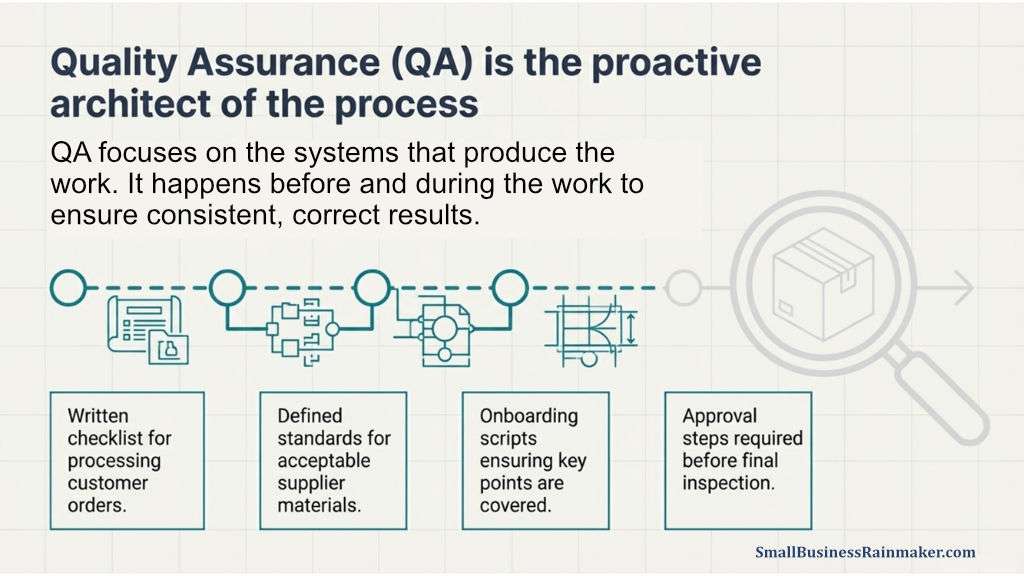
Quality assurance is the process side of quality management. Instead of inspecting finished work, QA focuses on building the systems and standards that make quality work more likely to happen in the first place.
QA is proactive. It happens before and during the work rather than after. The goal is to design a process that produces consistent results, so that catching problems at the end becomes less necessary over time.
Some practical QA examples for small businesses:
- A written checklist for how every customer order gets processed from start to finish.
- Defined standards for vendor materials.
- An onboarding script that ensures your team covers the same key points with every new client.
- A set of approval steps a product goes through before it ever reaches the inspection stage.
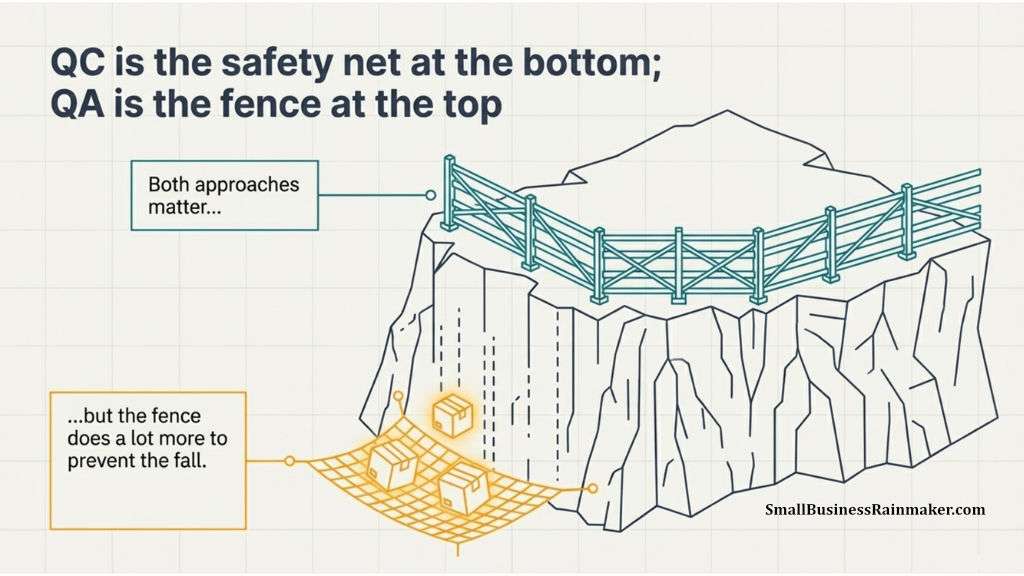
QC is the safety net at the bottom of the cliff. QA is the fence at the top. Both matter, but the fence does a lot more to prevent problems.
QA vs. QC at a Glance
Here is a side-by-side look at how the two approaches differ:
| Dimension | Quality Assurance (QA) | Quality Control (QC) |
| When it happens | Before and during production | After production or delivery |
| Focus | The process that creates the product | The finished product or service |
| Approach | Proactive to prevent problems | Reactive to catch problems |
| Who does it | Everyone in the business | Designated inspectors or reviewers |
| Goal | Stop defects before they occur | Find defects before customers do |
The key takeaway here is that neither QA nor QC replaces the other. Companies need both. But most small businesses are heavy on QC and nearly absent on QA.
Why Small Companies Default to QC (and What It Costs)
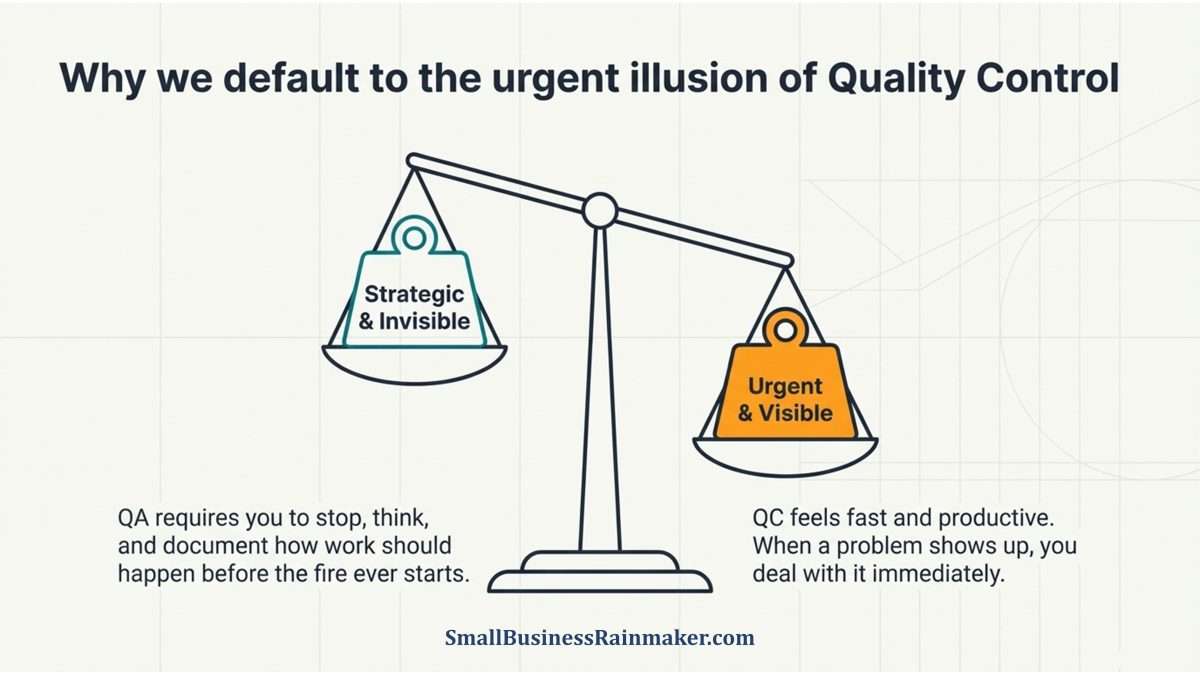
Quality control feels urgent and visible. When a problem shows up in a finished product, you deal with it. QA is less visible. It requires someone to stop, think, and document how work is supposed to happen before problems arise.
That is why most small business owners reach for QC first. It’s fast, it feels productive, and it solves the immediate problem.
The trouble is, without QA, the same problem keeps coming back. You inspect your way through the same mistakes again and again because the underlying process that causes them never changes.
Here’s an example.
A printing company stops a shipment from going out because it’s not packed in the correct box which was supplied by the client. This mistake happens regularly and the QC catches it, but the QA never happens. The salesperson, the bindery workers, and the production manager are all frustrated with the costly delay and the re-work. The owner is stressed that they can’t improve margins and is not sure why.
Businesses that rely only on QC also tend to have quality that depends on who is doing the work on a given day. QA creates consistency regardless of who is on the job.
How to Start Building QA Into Your Small Business
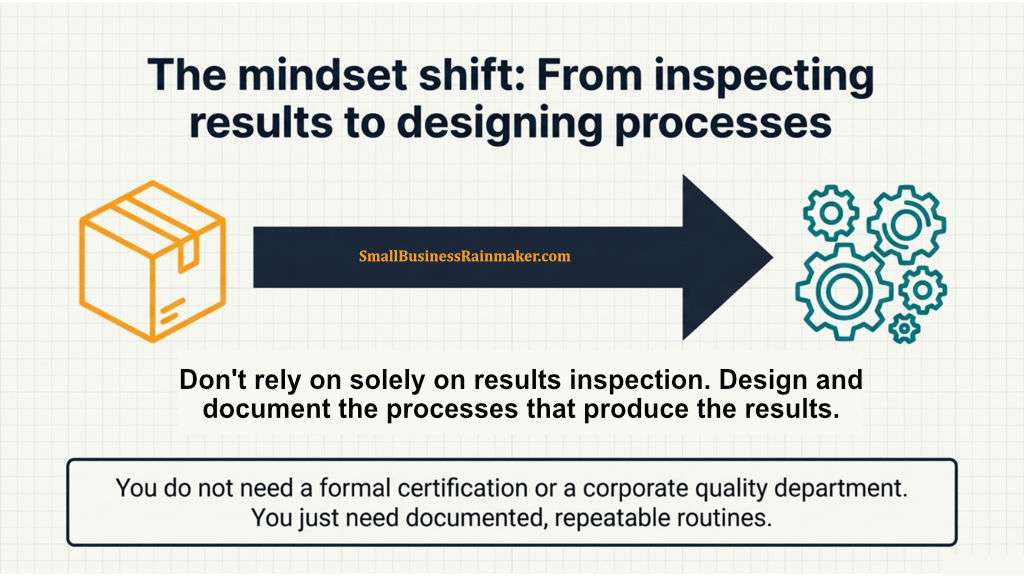
Small companies don’t need a formal certification or a dedicated quality team to practice quality assurance. They need documented, repeatable processes that everyone on the team understands and follows.
Here are three practical starting points:
1. Write down how work is supposed to be done. Even a simple one-page checklist for your most common tasks is a form of QA. It shifts quality from something that depends on individual memory to something that lives in a documented system.
2. Define what “good” looks like before work starts. Set clear standards for what an acceptable outcome looks like in materials, specifications, turnaround time, customer expectations. This way, everyone works toward the same target from the beginning.
3. Review your process, not just your results, when something goes wrong. When QC catches a problem, trace it back upstream. Ask what step in the process allowed that error to occur and fix that step.
This is the core mindset shift that QA requires. Start designing the process that produces the results and back it up with QC.
How QA and QC Work Together
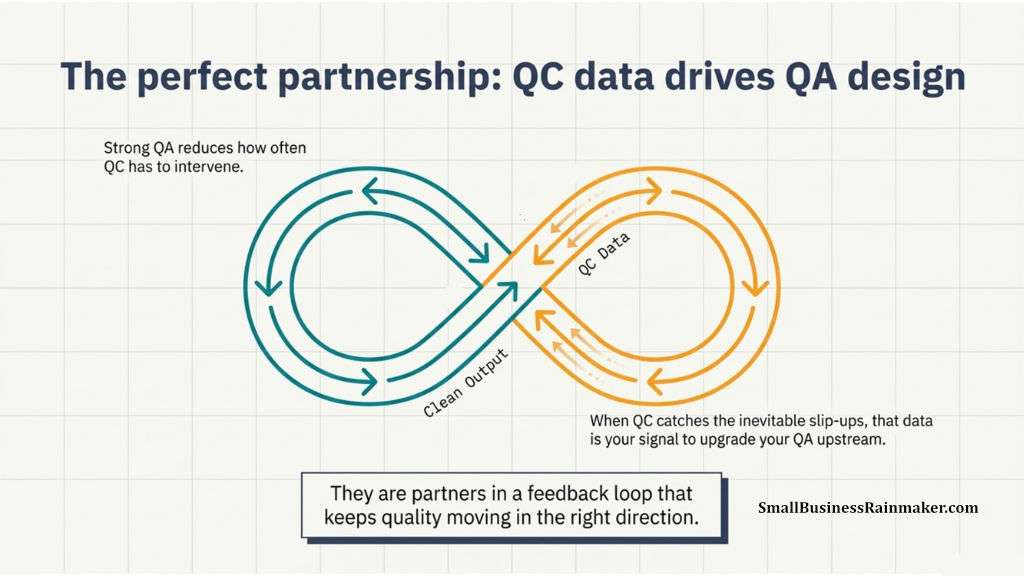
QA and QC are not competing systems. They’re partners in a feedback loop that keeps quality moving in the right direction.
Strong QA reduces how often QC has to intervene. When processes are solid, fewer errors make it to the inspection stage. But QC still catches the things that slip through even well-designed processes because no process is perfect.
The most effective setup is one where what QC finds regularly feeds back into your QA process. If the same type of defect keeps showing up at inspection, that’s a signal that something upstream needs to change. Use QC data to drive QA improvements, and use QA design to reduce QC burden.
A business with both in place spends less time correcting mistakes and more time serving customers.
The Bottom Line on QC and QA
Quality control catches problems. Quality assurance prevents them. Small businesses need both, but most invest heavily in QC and nearly nothing in QA.
The good news is that QA does not require a big budget or a corporate quality department. It requires clear, documented processes that define how work gets done before it is done, and a commitment to improving those processes when QC shows something is not working.
That is exactly what Business Process Management (BPM) is built to do. It doesn’t require the complex structure of an ISO 9001 certification but it can deliver the same results. If you are ready to move from reactive firefighting to a proactive system that produces consistent quality, take a look at Business Process Management for Small Businesses. It’s a simple, step-by-step program that walks you through how to build the documented, repeatable systems that make quality consistent, not accidental.


