
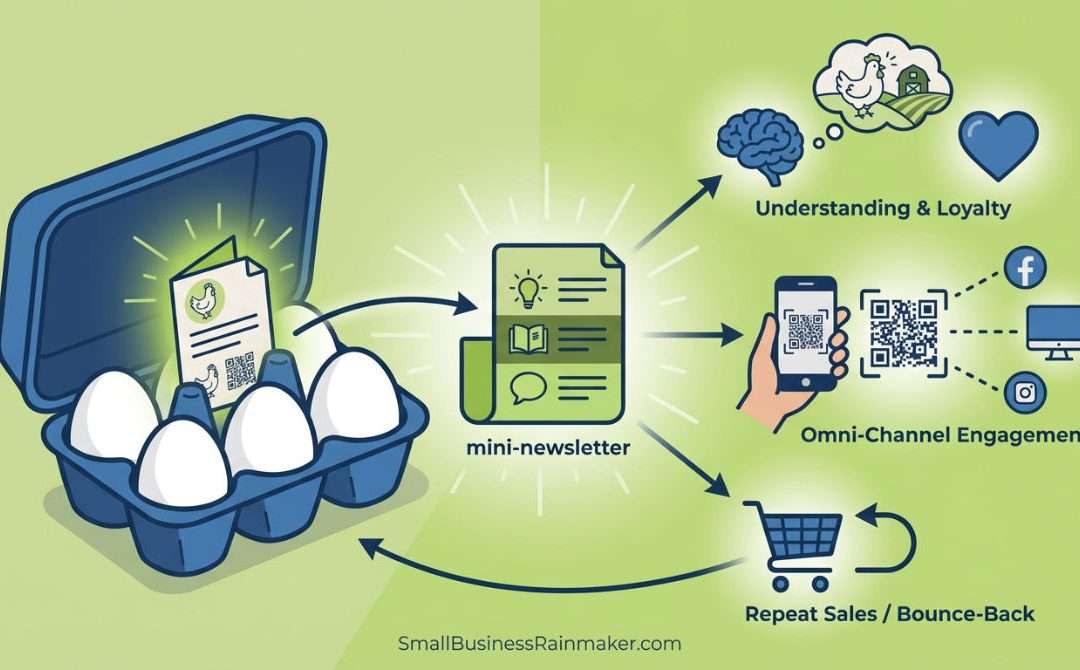
I recently enjoyed a piece of printed content that demonstrates one of the best ways to differentiate a product, to sell more of that product, and to sell more frequently. The method is readily available to companies of any size, even if they work alone and all they have is a desktop printer. And it works with “commodity” products, as I explain here.
Eggs are one of those commodity products. What could possibly be exciting about opening a dozen eggs from the local store? And enjoyable print marketing content? It doesn’t seem likely.
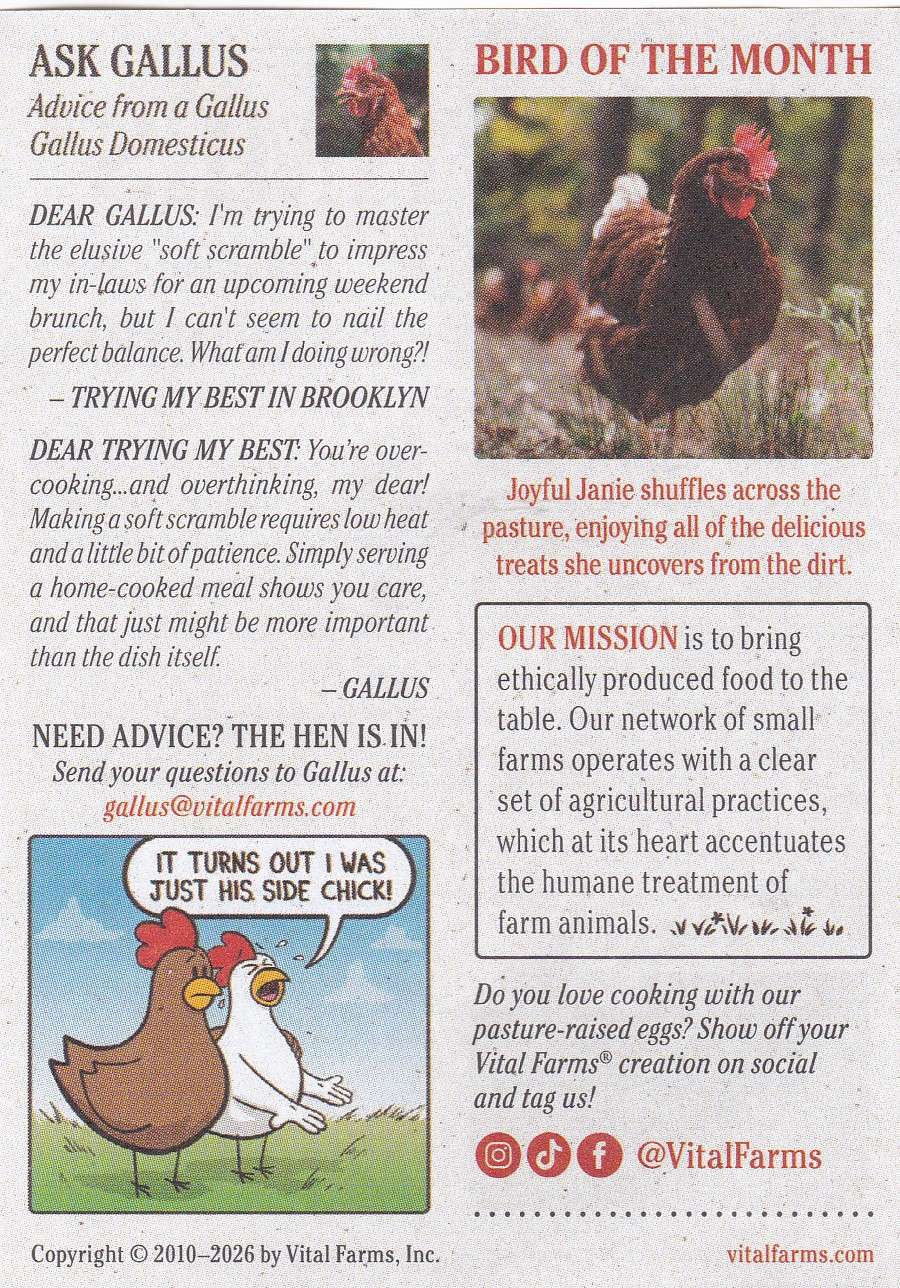
Yet inside this carton from Vital Farms I found a mini-newsletter resting right on top of the eggs (image below.) I couldn’t resist reading it.
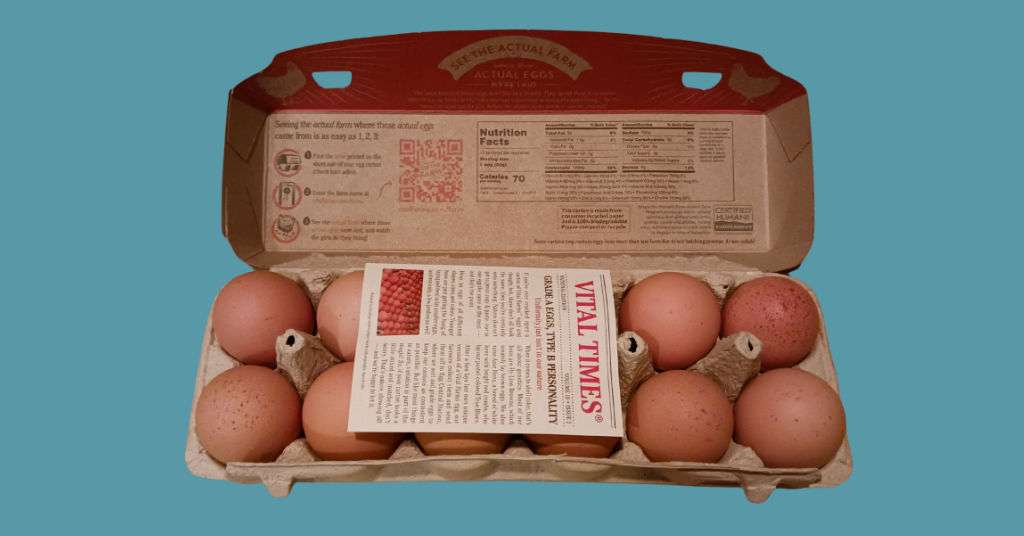
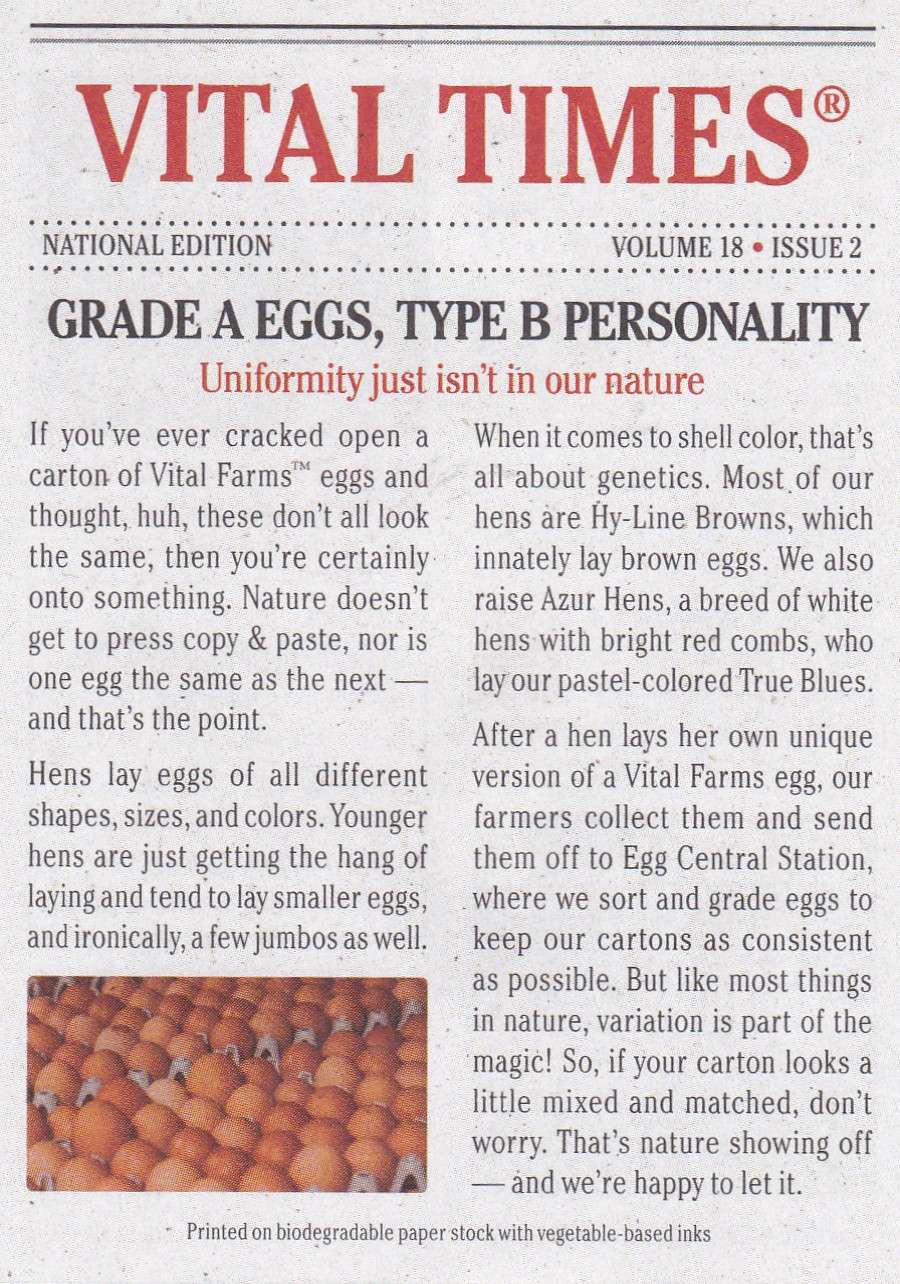
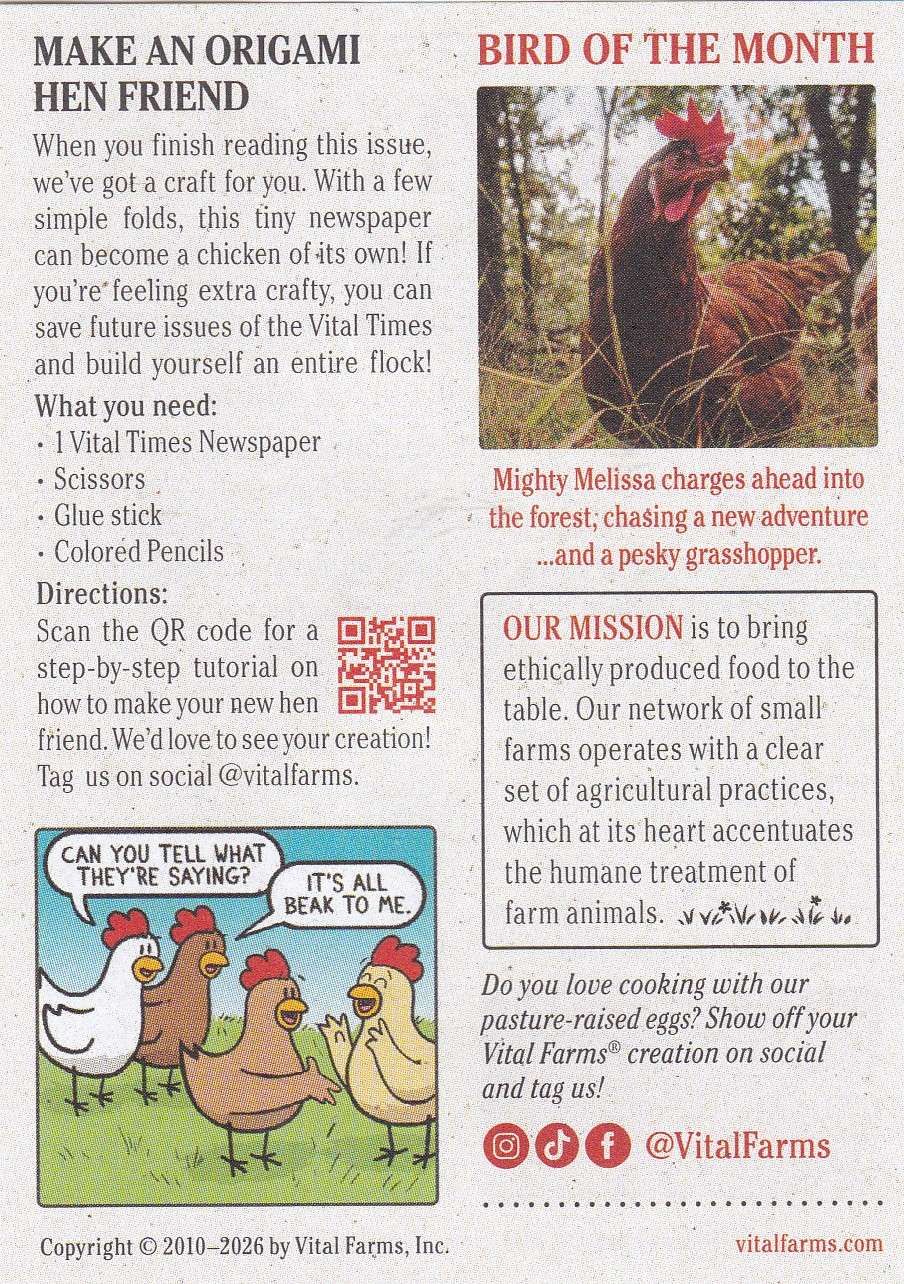
It’s formatted like a full-size newsletter with a Volume and issue number, a title, headlines, a cartoon, FAQs, a feature of their Bird of the Month, and a QR code linking to the site. You can also look up the actual pasture where the hens live who laid those eggs. All this on a 3 x 4.25” piece of paper with the look of newsprint.
Click on the image below to enlarge and scroll through two samples of their newsletter.

Transactional Messaging, or the Bounce-Back Offer
This kind of transactional communication, also called a bounce-back offer, is one of the easiest and least expensive marketing methods. You’ve already paid to get your product to the customer, so why not include a little something in the packaging?
It’s common to see coupons or special offers included with products. Companies want customers to “bounce back” for a repeat sale. But I especially like the mini-newsletter format because it’s less salesy and it can include multiple items:
- an offer,
- helpful tips,
- humor and cartoons,
- and relevant resources to keep the customer engaged with the brand.
This is one of my favorite types of content marketing tactics and we used it successfully for years when I was selling products to the print industry. When a client placed an order, we’d check to see which of our products they didn’t have. We’d then include samples with that order of what they could produce using those products. It only cost pennies and regularly resulted in sales.
The Many Ways Transactional Messaging Works
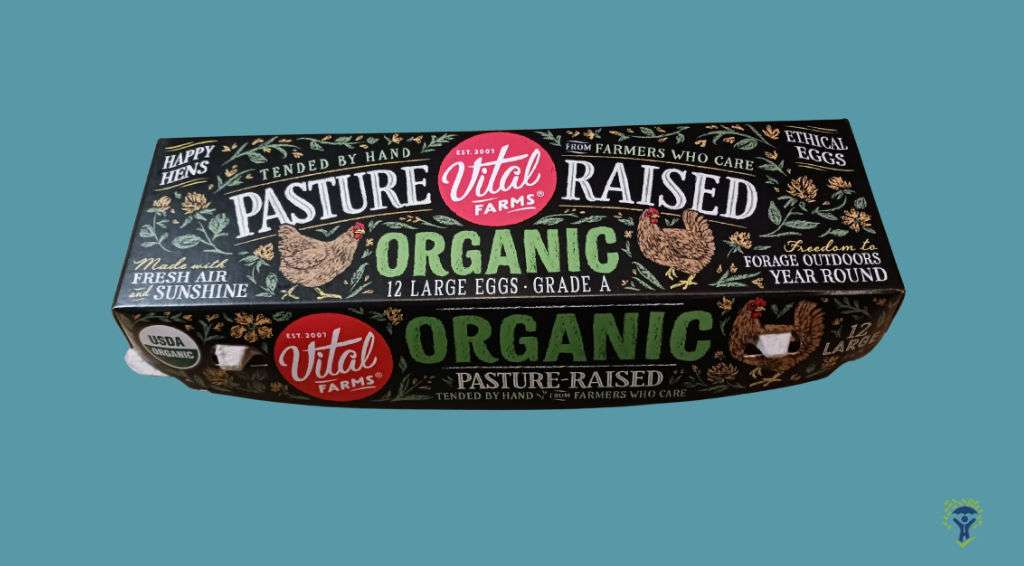
Our household supports local farmer’s markets as much as possible. But in the winter when the market is closed, we always look for ethical organic brands at our local store. For that reason, Vital Farms got my attention on the shelf with their unique packaging, as shown below.
Their eggs are pricier, perhaps even the most expensive. But we’re always willing to investigate new products, even eggs, and we happened to really like these eggs The newsletter helped me to understand the company’s mission as well as why they cost a bit more.
Vital Farm’s CEO, Russell Diez-Canseco, talked about the company’s origins in his 2025 Impact Report letter.
“We started on a single farm in Austin, Texas with the belief that chickens, as living creatures, deserved better than the caged, cramped existence that 95 percent of the laying hens lived in at the time. As we grew, instead of building bigger, factory style farms, we recruited other farmers who believed in animal welfare. We expanded our impact on rural communities from Arkansas to Kentucky by partnering with farmers who wanted to provide a living for – and in a lot of cases with – their loved ones on the land they owned.”
They’re also a certified B Corporation, which means they meet verified social, environmental, and governance standards.
Their philosophy resonated with me and eliminated any concerns I had about price. It cemented my relationship with the company.
I also spent a good chunk of my childhood on a chicken farm. My chores included picking eggs as well as washing, grading, and packaging them for sale. So their stories about family-owned farms mean something to me personally.
Now you don’t have to come from a chicken farming background for their message to resonate. The outside of their egg carton packaging is packed with all the following mentions:
- organic
- pasture raised
- ethical eggs
- tended by hand from farmers who care
- freedom to forage outdoors year round
- made with fresh air and sunshine and
- happy hens
That’s a lot of messaging that will appeal to a lot of consumers!
I also found a different newsletter issue with each new carton of eggs. It actually has me looking forward to the next dozen!
There are other features that I like about their packaging, in addition to the newsletter.
✅ They use every square inch of the carton to include some messaging, inside and out, aside from the required labeling.
✅ They use QR codes to drive people online. And yes, I went online to see where the chickens live.
✅ Once online, I found their website to be a refreshing break from corporate blandness. Their motto is “Keeping it BullSh*t-Free®”.
It includes ways to re-use egg cartons such as the DIY Egg Carton Garland, the Junk Journal Collage, and the Up-Cycled Cookie Carrier. They’re all in on their sustainability initiatives!
They talk about all things related to eggs. They have a blog. They have recipes and egg cooking methods.
And I only learned all this thanks to their tiny Vital Times newsletter.
What Are the Lessons from This Mini Print Newsletter?
There are three main takeaways from this little egg carton.
1 – Include a print marketing piece with every product shipment or service.
If you ship physical products, include some type of print marketing material with every shipment. Not just occasionally, but every time. Clients never remember everything you offer. If you doubt this, just ask any client to list all your products. I’ll wager they miss a few.
Service businesses can also do this. After the service call is complete, imply leave behind something printed that your client might find useful. Maybe you have a list of FAQs, a print catalog, or a helpful tips brochure.
The cost is negligible. A tiny newsletter, for example, might only cost pennies per piece, if even that. Make it part of the workflow. Simply enclose it with every shipment or leave it behind with every service call. The labor involved adds nothing to your costs, and you’re already paying to ship the product.
If you don’t have a budget for printing, design something simple in Word or Publisher and print it on your desktop printer.
2 – Use every square inch of your packaging to communicate with your ideal client.
3 – Use an omni-channel strategy. Vital Farms used print with QR codes and social media handles to drive customers to their website and social media channels. All their channels work together to build a base of dedicated customers and fans.
There truly is no reason not to use transactional messaging such as newsletters or bounce-back offers with every shipment that goes out or every service that’s rendered.
If you need help coming up with your own transactional messaging campaign, please get in touch with me here.


